Hudson Valley offers a plethora of services to students! The Values for Viking column has been spotlighting a variety of on-campus support services that help you save money. This week we look at the Student Success Center located in Suite 230 on the second floor of the Siek Campus Center.
The Student Success Center serves students from a variety of backgrounds through programs including Advancing Success in Associate Pathways (ASAP) and First Generation student meetups. These programs offer specific resources for students and incentives for attending events centered on wellness as well as a major lifeskill, budgetting. A few highlights of activities sponsored by the center include the Let’s Taco About It series featuring a free taco bar. First Generation students are invited to attend office hours on Mondays, 10–11:30 am and Wednesdays, 3–4:30 pm. Students looking for peer guidance on any question regarding college and campus resources. Many events are also geared towards fighting financial stress. To access upcoming events, students can view the events page on the HVCC website or visit the Wellness Wall outside of the food pantry.
Students experiencing housing needs and food insecurity can also benefit from the Student Success Center. Students are provided resources for finding basic need support near them. The Viking Cupboard food pantry next to the Interfaith Chapel gives students access to food and hygiene items. This is a free service available to all current HVCC students. Stop by Student Activities on the second floor of the Siek Campus Center in Room 310 for access. Check out the Student Success Center to level up your campus experience!
Scream 7 has finally been released after its extreme hype over the past year. Opening weekend, people did everything from dressing up as the killer from the movie, Ghostface, to the premiere to waiting in line outside the cinema door for Ghostface popcorn buckets. Despite Scream 7’s rocky past with the frankly uncalled for firing of Melissa Barrera (fired for speaking out against the genocide in Palestine), this film still managed to turn Scream into a billion-dollar franchise. But was it worth the wait?
This film starts out exciting with a cool opening scene and rather solid acting from the main characters. There’s many scenes that made me excited in the theater, such as the return of an important past villain. Ghostface’s scenes are also quite terrifying in this film. There’s a lot of scenes of him coming out of the dark in creepy ways and attack scenes that add horror into the film. However, that’s where the great parts of the film end.
The Scream franchise is known for its self aware commentary on horror films, and this film tries to add that in. However, it falls flat since there’s no more self aware commentary to add. Especially with the token inclusion of some characters who were known for adding self aware commentary into the last two films. There’s a little bit of self aware commentary when “nostalgia-bait” films are mentioned, but that’s about it.
The acting from the lead actors, while solid, sometimes feels like they just want to get this movie over with. This makes the audience feel the same type of “Alright, let’s get this over with…” sort of feeling as well. Even Roger L. Jackson, who plays Ghostface’s infamous voice, feels like he’s not trying very hard.
Scream over the years has kind of lost its soul, but I still did enjoy Scream (2022) and Scream VI a great deal. Nevertheless, I was having a good time while watching this film until the end. Every Scream film has a shocking killer reveal, but this film’s freaks felt like they grabbed two random characters and had them in the costumes. That completely took me out of the movie and made the earlier scenes feel like they weren’t building up to anything.
Overall, while this film is fine, I feel like its whole excitement and horror falls short in the end. I’d say watch this if you’re a Scream fan, but be prepared for the disappointing parts. This is a scary movie that needs work, but maybe Scream 8 will redeem it.
Most pre-law students will eventually have to take the LSAT; the Law School Application Test administered by the Law School Admissions Council or LSAC. This exam lasts up to three hours containing two scored sections and one random unscored section. However, students are not informed on which sections are scored so adequate performance on all sections is necessary.
The first section that shows up on the LSAT tests logical reasoning, abbreviated LR. In this part of the exam, students are given a short paragraph explaining a situation followed by a question stem that requires application of logical principles and reasoning skills. For example, a question might ask you “which of the following arguments is most similar in structure to the one above?” Another may ask “which of the following assumptions would be necessary for the argument to proceed?” These questions test your ability to analyze arguments and situations as well as apply tools to determine the correct answer.
The second section that shows up on the LSAT is reading comprehension, abbreviated RC. Rather than the short paragraphs in the previous section, RC provides you with long, heavy passages followed by a set of questions testing your critical thinking and information retention. The key to the RC section is to recognize that the LSAT is a standardized test. That means for every question, there is only one single correct answer. For this reason, any correct RC answer will have a clear, citable, and inarguable quote from the passage that renders it correct. Don’t fall for tricks set-up to trigger personal associations, if the author didn’t mention it then it cannot be correct. Unless the question is an inference question in which it’s necessary to search for a clear implication in the text.
Finally, the LSAT contains an unscored argumentative writing sample. This can be taken at a completely different time and location from the LSAT itself within a range. In this section the test-taker is provided with a prompt and given 15 minutes of planning time. After the time is either over or the test taker chooses to proceed, the 35 minute essay-writing limit begins. While completing the sample a proctoring system is utilized and a webcam must be used. This sample is not graded but is visible to admissions councils.
The final question concerning the LSAT is about preparation. Should students invest in a preparation course? Prep courses are expensive and can even be a waste of money unless specific conditions call for it. Instead, free online sources — such as Insight LSAT’s 8 video guide to the exam— can provide students with all they need to succeed on the exam. What’s important is practice. The LSAT is a test of reasoning, not content. Students should take the practice LSAT tests directly from the LSAC site and spend careful time on review.
Does an individual choose individualism and loneliness by their own will, or is it life’s circumstances that push them into this situation? Does being an independent individual make one stronger, or does it gradually lead to loneliness? Are solitude and individualism always negative, or can they serve as opportunities for personal growth? Do social structures encourage individualism in a way that ultimately isolates people, or can individualism and social connections coexist in a balanced manner? The answers to these questions undoubtedly vary depending on individuals, living conditions, and geography. However, we can explore the topic from a general perspective. Individualism and loneliness are inherent aspects of human nature and social structures. While some people consciously choose individualism, others experience loneliness as a necessity. Individualism entails making one’s own decisions and developing an independent identity, whereas loneliness is often an emotional state. Some individuals embrace individualism due to their desire for freedom and independence, while others find themselves alone due to social exclusion, the isolating effects of modern life, or the weakening of social bonds. Choosing solitude can be beneficial for personal growth and inner peace, yet in the long run, it may also have negative consequences due to the weakening of social ties. Solitude provides an opportunity for deep reflection, self-discovery, and independence. It allows one to make decisions freely and focus on their dreams and goals without external influences. If solitude is consciously and moderately embraced, it can be advantageous. For example, one may dedicate time to personal development, engage in reading, writing, or pursue artistic and academic endeavors. However, prolonged solitude without meaningful social connections can weaken social skills and lead to feelings of emotional isolation. Given that humans are inherently social beings, complete solitude may eventually result in emotional emptiness, depression, or loss of motivation. But what about being condemned to loneliness? Being forced into solitude—not as a personal choice, but as an unavoidable condition—can be particularly distressing and exhausting. While choosing to be alone at times may bring a sense of peace and freedom, being alone out of necessity creates an entirely different emotional state. It can lead to feelings of being misunderstood, excluded, or forgotten. A profound sense of emptiness may arise, potentially causing sadness, hopelessness, or emotional exhaustion. The weakening of socialites, the absence of someone to share problems or joys with, and the lack of support can have a significant impact on one’s mental well-being. Not having someone to confide in or celebrate with may lead to a loss of life’s meaning and personal motivation. The key is to view solitude not as an escape but as an opportunity for growth. While taking time for oneself and reflecting in solitude can be valuable, it is also essential not to sever ties with those who care about and value us. By maintaining a healthy balance, one can preserve their individuality while also strengthening social relationships. Particularly in Western societies, such as the United States, individualism is culturally encouraged. From an early age, people are raised with the belief that they must be self-reliant. Personal achievement is often prioritized over family ties. However, this can lead to the weakening of social relationships and an increasing sense of loneliness over time. Although technological advancements have strengthened virtual connections, face-to-face communication has diminished, leaving people feeling isolated even in crowded environments. Loneliness has become a serious public health issue in the U.S. Despite living in densely populated cities, people struggle to form deep and meaningful connections. Factors such as the placement of elderly individuals in nursing homes, the decline of familial solidarity, and the widespread adoption of individualistic lifestyles contribute to the growing sense of isolation. Although individualism is seen as a form of freedom in Western societies, the weakening of interpersonal relationships can make loneliness inevitable. Conversely, Eastern societies tend to emphasize strong family and community bonds. In countries like Turkey, social belonging is often prioritized over individualism. Family relationships, solidarity, and kinship ties play a crucial role in people’s lives. However, this cultural emphasis can sometimes result in societal pressures that restrict individual freedom. People may feel compelled to conform to social expectations at the expense of their personal aspirations. Therefore, it is crucial to strike a balance between individualism and social belonging. Creating a space for personal autonomy while maintaining meaningful social bonds is the healthiest approach for mental well-being. Excessive individualism can lead to isolation, while overwhelming social pressure can limit personal freedom. Hence, individuals must find a balance that allows them to feel both independent and socially secure. Being surrounded by insightful and open-minded people who respect one’s thoughts, emotions, dreams, and ideals is a nourishing and enriching experience. Establishing profound connections with such individuals fosters a sense of being understood and valued while also eliminating loneliness. For instance, an individual passionate about art will thrive in an environment that appreciates creativity, enabling them to express themselves more freely and develop their artistic potential. Similarly, an idealist striving to contribute to society will feel empowered and motivated when surrounded by like-minded individuals. These meaningful relationships encourage growth and prevent isolation, allowing people to build connections that provide both support and inspiration. Loneliness can sometimes be difficult and melancholic but remaining in a harmful environment can be even worse. A bad friend can erode trust, lead to poor choices, and negatively impact one’s character over time. In contrast, solitude can provide an opportunity for self-reflection, peace, and the patience to wait for the right people. Therefore, rather than settling for harmful relationships just to avoid being alone, it is often wiser to embrace solitude while seeking meaningful connections. As a well-known saying beautifully captures: “Loneliness is better than a bad friend, but a good friend is better than loneliness.”
Taco Bell is located at 563 N Greenbush Rd, Rensselaer, NY 12144, just a short stroll from campus. Its long menu offers many options. The company’s recent promotions of Luxe Boxes may give you the most bang for your buck. Taco Bell offers an extensive Cravings Value Menu with items under $3 each. While this is a great price for a pick-me up snack, their Luxe Boxes may keep you full for longer. There are currently four Lux Boxes available, one of which is only available online. These boxes range from $5 to $9 and contain a drink, chips with nacho cheese, and two to three entree items, depending on the box. They also offer up-charges for specialty drinks in the box. This box is sure to serve more like a meal and may even be shareable with friends. If ordering through the app while still on campus, the food is sure to be cooking, if not ready by the time you get to Taco Bell. Is it a good value? I’m going to breakdown the Supreme Luxe Box for this example. It comes with a medium fountain drink, a chalupa supreme with chicken, a beefy 5-layer burrito, a crunchy taco, and chips with nacho cheese. A medium drink is $2.79, a chapula supreme with chicken is $6.19, a beefy 5-layer burrito is $4.19, a crunchy taco is $1.89, and chips with nacho cheese are $2.59. This means that the Supreme Luxe Box is valued at $17.65 while only costing customers $7. This is a huge deal for college students. With Taco Bell being conveniently located near HVCC, do a glance at their combo and box offers. Be sure to download the Taco Bell app to earn rewards and order online exclusive menu items.
Horror fans have been eating well lately, and Ti West’s X, Pearl, and MaXXXine serve up a twisted, blood-drenched feast. This trilogy is both aesthetically pleasing and wildly entertaining, but at times, it also walks a fine line between homage and indulgence. That being said, it’s a horror experience worth diving into, especially for those who love their slasher flicks with a side of artistic flair. The concept of three movies spanning different time periods yet all connected through character and theme. Genius. X gave us a gritty, ’70s-style exploitation horror that felt loving and critical of the genre’s past. Pearl flipped the script entirely, delivering a psychological character study wrapped up in a gorgeous technicolor package. Now, with MaXXXine, we see a neon-drenched, sleazy yet stylish conclusion that, for me, marks Mia Goth as one of horror’s most compelling leading ladies. Speaking of Mia Goth, wow. This trilogy introduced me to her, and I’m officially a fan. She’s mesmerizing, bringing a level of intensity and commitment that elevates these films beyond what viewers can typically expect from horror/slasher films. Pearl especially let her shine, giving us a villain (or tragic antihero?) with so much depth that it was impossible to look away. That monologue? Chilling. She really carries these movies in a way that makes them unforgettable. While I loved the trilogy, I’d be lying if I said I didn’t have some conflicting feelings. At times, the violence, especially towards women, felt dangerously close to slipping from critique into exploitation. There were moments where I wasn’t sure if West was exposing the genre’s history of objectifying women or continuing it. But considering the time periods these movies are set in and the commentary they seem to be making, I lean towards believing it’s intentional. Still, it’s a conversation worth having. One thing that can’t be debated is the trilogy’s style and execution. The casting is spot-on, the acting across the board is excellent, and the way each film embraces its era, both visually and tonally, is impressive. The plot twists hit hard, the horror is effective, and the emotional moments (especially in Pearl) land in ways most slashers wouldn’t even attempt. These movies are bold in a way horror should be. They aren’t just about gore and body counts; they have something to say. Overall, I highly recommend checking these films out if you haven’t already. Or if you have, they’re worth revisiting with fresh eyes, especially now that the full trilogy is out. They’re stylish, twisted, well-acted, and memorable. Ti West took big swings with this series, and for the most part, he hit the mark. Horror is better when it takes risks, and X, Pearl, and MaXXXine prove that sometimes, the best scares come wrapped in unexpected, brilliantly crafted packages.
It’s winter and nothing is worse than having to make multiple stops on the way home from class to get your week’s necessities. Shopping in bulk is not a new concept. BJ’s and Sam’s Club are both located within the capital region. However, with the chance of Costco starting construction in Guilderland this year, it’s important to be informed on the benefits and downsides of buying in bulk. Membership costs are a common fee when attempting to shop at a warehouse. Sam’s Club is running a new year offer until May 31st. New joiners get 25% off their membership meaning instead of a $50 a year card, it’s now only $25. Not a bad deal. A standard BJ’s membership is regularly $60 a year but their website is currently promoting a deal for new members with the card being only $20. The details of this promotion are unclear on the website.
Is it worth the membership fee? Buying in bulk is known to be a cheaper alternative to the grocery store. Where can you buy a family-size pack of pencils and a rotisserie chicken? If you shop for a large amount of people, this may be the place for you. Rather than buying multiple packs for the same thing, these places are best for people who need a lot of the same. However, this is not the place to try something you might not like, unless you try the free samples, as you’ll be stuck with an entire pack of it. Perhaps the best deal at warehouse stores is their cafes. Sam’s Club’s meal deals include a hot dog and a drink for just $1.50, a slice of pizza and a drink for $2.50, and frozen yogurt for $1. Buying in bulk is a great option to find a large quantity of all your favorites, if you’re interested in joining a warehouse club now is the time as the membership fee is reduced.
Fear is an inseparable part of human nature. It serves as a natural defense mechanism that protects us from danger, yet it can also become a restricting barrier in our lives. Humans experience anxiety in the face of the unknown because anything unfamiliar may be perceived as a threat. However, fear is not merely an emotion to be avoided; rather, it presents an opportunity for growth and empowerment. If we can manage our fears appropriately, they can guide us beyond our limitations and shape us into more courageous individuals. Although fear is often perceived as a negative emotion, it plays a crucial role in our lives and provides certain benefits. Fear safeguards us from danger and triggers instinctual responses necessary for survival. Particularly in the presence of physical threats, it activates our bodies to react swiftly. Furthermore, fear encourages us to surpass our limits and learn to be braver. Despite our hesitations about stepping into new experiences, fear enhances our awareness and caution, serving as an essential guide on the path to success. It also contributes to our personal development; every time we summon the courage to overcome a fear, we feel stronger and more self-confident. This process transforms us into more resilient individuals who can navigate life’s challenges. In essence, fear acts as a companion that helps us explore our boundaries, develop courage, and realize our potential. Perhaps the greatest virtue fear can grant us is this ability to discover our own strength. Facing our fears may cause discom fort, yet it is deeply rooted in psychological factors. Fear is often associated with the unknown or uncontrollable, which generates a sense of insecurity. The less predictable an event or situation is, the greater the fear it evokes, as uncertainty fosters vulnerability. Confronting fear necessitates experiencing this uncertainty firsthand, forcing individuals out of their comfort zones. This situation can trigger anxiety about potential physical or emotional harm. Addressing fear also means confronting past traumas, vulnerabilities, and weaknesses. Thus, fear frequently emerges as a mental defense mechanism, as the human brain, consciously or subconsciously, seeks to protect itself. However, while these confrontations may be challenging, they also facilitate personal growth. Facing fears ultimately allows individuals to discover their inner strength and mature, though this process may initially be unsettling, as change always occurs outside the comfort zone. Therefore, fear persists both as a protective force and as a catalyst for development.
Overcoming fear and embracing a transformed identity enriches our lives in numerous ways. First and foremost, self-confidence increases, enabling in dividuals to confront challenges with greater courage. This positively impacts personal relationships, professional endeavors, and overall quality of life. As individuals become more self-aware, they gain a clearer understanding of their desires and values, fostering inner peace and balance. Overcoming fears enhances adaptability and resilience, better preparing individuals for life’s fluctuations. As we assume new identities and roles, our perspectives on the world evolve, making us more open-minded and empathetic individuals. This transformation not only fosters self-acceptance but also serves as an inspiration to others, providing them with courage. Ultimately, reconciling with and overcoming fear renders life more meaningful, fulfilling, and rewarding. The success stories of prominent scientists, educators, and innovators are filled with examples of individuals who confronted their fears and achieved remarkable accomplishments. For instance, Thomas Edison, despite experiencing numerous failures and disappointments, invented the electric lightbulb. Edison viewed each failure as a learning opportunity and remained undeterred. The fears and uncertainties he encountered only strengthened his determination and resilience. Another example is the renowned scientist Marie Curie, who challenged both societal perceptions of women and the limitations of the scientific field. Despite the risks and uncertainties of her research, she became the first woman to win a Nobel Prize and revolutionized her discipline. By discovering and embracing their potential, these individuals confronted their fears and overcame them, transforming themselves into symbols of courage and perseverance. Their journeys illustrate how fear shaped their lives and propelled them toward meaningful achievements. In conclusion, for individuals ready to confront their fears and undergo transformation, the first step is to trust in their inner strength. Fear often originates from deep-seated subconscious anxieties, making it a process that must be gradually overcome. Progress should be made step by step, as each small victory fosters significant confidence. Understanding and confronting fears is the initial and most crucial step toward overcoming them. Additionally, developing mental awareness to counteract negative thoughts is essential. When thinking about fears, it is important to acknowledge the emotions they evoke and approach them with kindness. Learning to trust oneself is a critical component of this journey. Rather than comparing oneself to others, individuals should celebrate their own progress. One must accept that fear is not a hindrance but a force that strengthens and empowers. Ultimately, overcoming fear will cultivate a stronger, more resilient individual. While this transformation takes time, each step forward leads to greater freedom and inner peace.
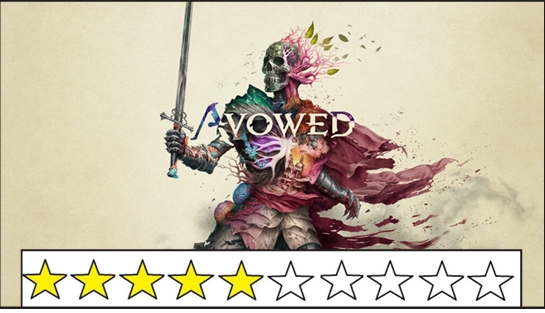
Avowed is a complex game to review. I am one of Obsidian Studios’ biggest fans. I loved Fallout New Vegas. My squad and I have played hours upon hours of Grounded, so not coming away with a similarly happy experience left me thinking I was reviewing wrong, not that the game had issues. In the end, it has a good base and can become something great, but I found it underwhelming, especially compared to the other First-Person Story RPG I played recently, Kingdom Come 2. I found the combat animations weird and claustrophobic, the world very lacking in immersion, and besides graphics, I thought there were very few things that stood out about this game. The story was unique, but it is nowhere near the openness levels of Skyrim. Many things such as Item Collision, Town/NPC Interactions, and Physics are surprisingly subpar compared to older games. However, I have to say that while the story was a tad cliche, with “Outlander comes from afar to fix the frontier’s issues” being the prevalent theme, I found the world and Soul plague to be quite interesting. Having never played Pillers of Eternity, which is the world the game takes place, I was glad for an opportunity to check out the setting. In addition, I found the issue of the “Last of Us but magical” zombie issue intriguing yet ultimately underwhelming like most other aspects. I also thought locking the character behind playing a Godlike Envoy instead of letting players have a more free-form character creation be far more annoying than immersive. In the end, Avowed is not for everyone, but as someone who has played over 100 hours of games in this genre, I think playing Outer Wilds, Grounded, and Fallout New Vegas is a better Support of Obsidian than wasting money on the 70-dollar price tag of Avowed.
With thirteen Oscars nominations, a Rotten Tomatoes critics score of 72%, and a Golden Globes winner of multiple awards, you’d expect Emilia Pérez to be a great movie. You’d be unpleasantly surprised. After watching the film, the 17% audience score makes sense. Emilia Pérez is a musical crime drama following the journey of Juan “Manitas” Del Monte aka Emilia Perez (played by Karla Sofía Gascón), a Mexican cartel leader who decides to go through with a gender-affirming surgery in order to escape her criminal past and then attempts to make up for the atrocities she committed while operating in the cartel. The film aims to explore themes related to redemption and identity in the midst of transitioning all while attempting to showcase Mexican culture. However, all of these attempted feats go highly undone. The film does little to properly delve into these heavy subjects, leaving much to be desired, and it is as if they were only included to check a box rather than genuinely explore any of these subjects. The exploration of the trans-identity is lackluster, and it does not seem to delve seriously enough into the complicated nature of how a redemption arc is even possible for a former cartel leader. There is also the issue of the stereotypical depiction of Mexican culture, which has led to many Mexican actors and individuals boycotting the movie altogether or walking out of a viewing. So much so, that the major movie theater chain in Mexico, Cinépolis, had to clarify their policy from the sheer number of people requesting refunds due to their dissatisfaction. There is a decent amount of controversy surrounding this movie, not only concerning the general distaste towards the movie from the respective communities they attempt to tailor to. But the director himself is French, failed to cast any Mexican actors, and has made rather rude comments towards the Mexican and Spanish-speaking communities. Not only that but the main actress Karla Sofia has received major backlash for comments that she’s made. These only enhance the shallow way the film approaches its social themes.
Karla Sofia Gascón does alright playing Manitas/ Emilia. Zoe Saldana and Selena Gomez also star in the movie. Zoe Saldana plays a lawyer trying to clear “Manitas” past and aiding in transitioning the main character. Meanwhile, Selena Gomez plays the main character’s ex-wife. Zoe Saldana does a decent job with the role she’s been given. Selena Gomez does seem to try her best here, but she is not fluent in Spanish and allegedly had minimal time to learn, so her dialogue’s cadence in the movie appears off, even to the un trained ear. There is also the fact that this movie is a musical. However, most of these musical numbers come off as poorly written and choreographed, with off key singing more often than not. It comes off as gimmicky at times and almost feels like an SNL skit of a musical at some points rather than a serious film. Perhaps it would come off as more entertaining had it been made to be a comedy. Look up any of the songs if you’d like to see for yourself. ‘El Mal’ or ‘La vaginoplastia’ will do. Perhaps a bigger blunder is that even with all the plot lines, music, and failed thematic exploration, the film begins to feel rather boring the longer it drags on, it becomes a struggle to even sit through one viewing. The overall filmmaking exudes a sense of being erratic. The writing comes off as surface-level and messy. So many plot threads come up that all just feel rather pointless in the end.







 The Hudsonian